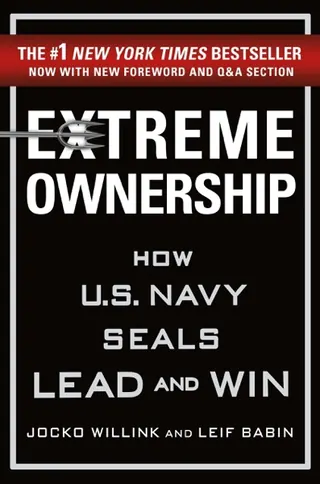
Extreme Ownership
Willink and Babin draw on their experience as Navy SEALs to make one uncompromising point: leaders take full responsibility for their team’s successes and failures, with no room for excuses. Each chapter pairs a combat scenario with a business application, and the format works better than it should, because the combat stories strip away the ambiguity that lets business readers wriggle out of the lesson.
The idea sounds harsh until you try it. Owning the failure changes what you do next. If a project failed because “the vendor underdelivered,” there is nothing for me to fix. If it failed because I chose that vendor, wrote that contract, and did not check progress until it was too late, I have three concrete things to do differently. The first framing protects my ego; the second one protects the next project. Teams also notice, quickly, when their leader stops looking for someone to blame; it changes what they are willing to tell you, and how early.
The chapters that get less attention are the ones I use most: decentralized command and keeping plans simple. Running a technology team spread across multiple locations, I cannot be in every decision, and trying to be would just slow everything to my speed. The book’s standard is that every person should understand not just their task but the intent behind it, so they can act correctly when the situation shifts and the plan no longer fits. Most of my job in an incident, an outage, a deadline crunch, is done beforehand: making sure intent was clear enough that I am not the bottleneck at 2 a.m.
The tone will not suit everyone, and a few chapters repeat the thesis more than they extend it. Even so, I recommend it to any leader who wants a more accountable team. It starts with how you respond the next time something goes wrong, and the book leaves you nowhere to hide on that.