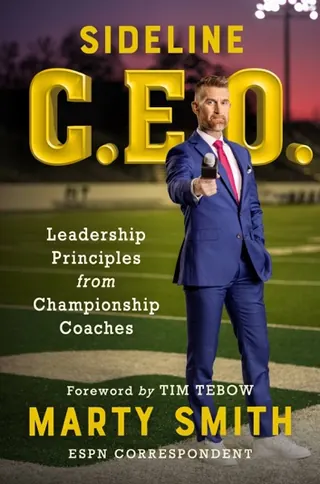
Sideline C.E.O.
Smith is a longtime sports journalist, and the access shows. He interviews successful coaches across sports and pulls out what makes them effective: how they motivate people who are already talented, how they handle pressure without passing it down the roster, and how they build cultures that hold up when the season goes badly. Nick Saban’s process orientation and Dabo Swinney’s culture-first approach get real treatment here, not just highlight reels.
What makes the coaching setting valuable is that nothing is hidden. A coach’s results are public every week, the roster turns over constantly, and the margin between winning and losing programs is mostly culture and preparation. There is no quarter where you can blame the market. That constraint forces a kind of honesty about leadership that corporate books can talk around.
Two themes stuck with me. First, the best coaches are relentless about standards rather than outcomes; they coach the behavior and trust the scoreboard to follow. Second, they invest heavily in the people nobody is watching, the backups and the support staff, because culture is set by how you treat people who cannot immediately help you win. Both translate directly to running a technology organization. My team’s scoreboard is less public than a Saturday game, but response times and uptime are visible to every client we serve, and the standards conversation matters more than the metrics conversation.
I will admit the book benefits from the reader liking sports; the stories carry the weight, and if college football means nothing to you some chapters will drag. But leaders who learn better from stories than from frameworks will get more from this than from another matrix.
A good read for anyone who suspects that culture is built in the daily details, and wants to see how people who cannot hide from their results actually do it.