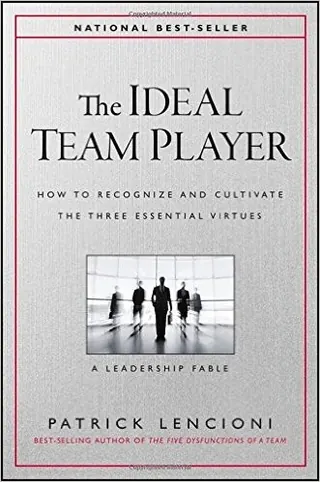
The Ideal Team Player
Lencioni’s model here is that strong team members share three virtues: they are humble, hungry, and smart about people. Told through his usual fable format, the book spends most of its energy on what happens when one virtue is missing, and those profiles are the memorable part. Humble and hungry but not people-smart is the “accidental mess-maker” who leaves damage without meaning to. Humble and smart but not hungry is the “lovable slacker.” The dangerous one is hungry and smart but not humble, the “skillful politician,” because that person looks like a star to their manager while quietly corroding the team.
The practical payoff is in hiring. Running a small technology team inside a mid-sized company, I do not have the headcount to carry a brilliant person who cannot work with others; every hire changes a meaningful percentage of the team. This model gave me concrete interview language for what I used to assess by gut feel. Asking a candidate to describe a failure and listening for whether the word “we” appears when things went well and “I” when they went badly tells you more about humility than any direct question. For hunger, I have learned to ask what they built or learned that nobody asked them to.
It matters just as much in development. The framework gives you a way to have a coaching conversation that would otherwise stay vague. “You need to be more of a team player” lands nowhere; “you are strong on hungry and smart, and here are two specific moments where humility was the gap” gives someone something to work on. Lencioni is direct that hunger is the hardest virtue to instill, and my experience agrees; I have coached people up on the other two, but I have never manufactured drive.
Most useful for leaders who are actively building a team and want a clearer bar for who joins it, and a fair vocabulary for developing the people already on it.